

Our Impact Report: 20 Years of Value, a Renewed Commitment
On the occasion of our first twenty years, we present an Impact Report that goes beyond a simple account.
It is a tool for analysis, transparency, and learning, telling not only the results achieved, but also the methods and motivations that guide us.

Within this interactive platform, we have enriched the narrative with multimedia content and highlights drawn from the written report:
Data and insights to assess our performance
Video stories to give voice to our projects
Quotes and interviews to share the vision of our stakeholders
We do not see this as a final milestone, but as a solid foundation from which to move forward and renew our commitment: to continue generating value, to imagine new ways of living, and to contribute to a greener, more vibrant, and more inclusive city.
When the happiness of the youngest confirms our vision.
“Why are public places at the heart of our commitment?
Because they are like the navel of the city—an indelible mark that reminds us of a fundamental truth: we do not exist as isolated individuals, but through our relationships with others.
Just as the navel reminds us that our story begins with a ‘we’ rather than an ‘I’, urban spaces open to the public are where the relationships of a community are expressed and brought to life. It is from here that we begin to imagine and build the future of our cities.”
What follows is the story of this ‘we’ and the journey we have undertaken.

Partecipating is sharing
Let me tell you about Riccardo Catella’s dream
Vision, roots, our story
Accessibility and inclusion: rethinking a public space for everyone, together
Cultural and Civic Program
Città Generative (Generative Cities)
Scientific research activities on cities, designed to foster learning and stimulate dialogue.
I Progetti della Gente (The People’s Projects)
Generative projects in publicly accessible spaces, characterized by diverse geographies.
Ongoing Projects #1

MiColtivo, Orto a Scuola
Redevelopment of the school gardens of 9 public schools
Design and creation of educational gardens
Engagement of the school community and families in collective care
Educational training for teachers and students
“Creating a school garden does not simply mean planting a few seeds, growing some plants, or harvesting vegetables. It is an opportunity to help children develop awareness, respect for nature, and a love for work done together and with their own hands. Educational gardens are a way to teach children fundamental values such as collaboration, respect, patience, anticipation, care, and responsibility.”
(Federica Carrara, Teacher involved in the MiColtivo, Orto a Scuola)
Environmental Education and Urban Life: The Impact of MiColtivo, Orto a Scuola
Ongoing Projects #2
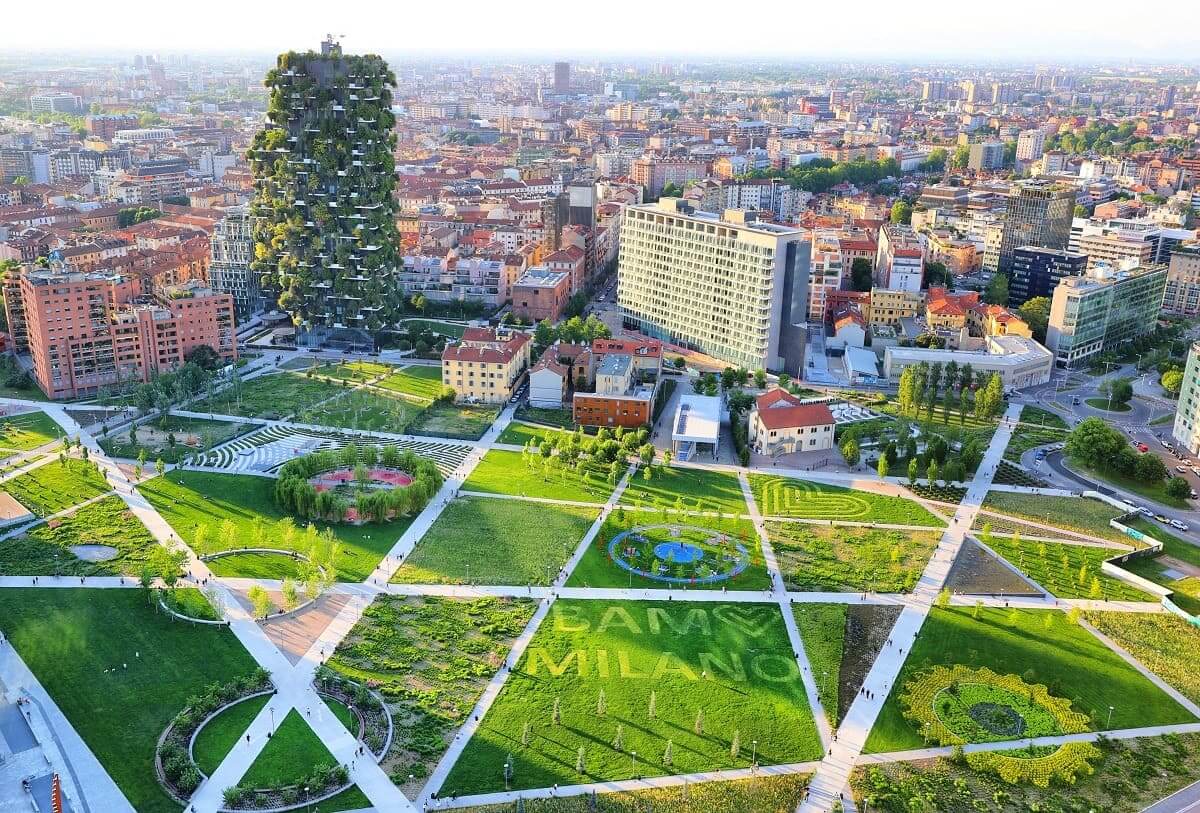
BAM – Biblioteca degli Alberi Milano
Development of an innovative public-private partnership
Regeneration of 90,000 sqm of urban green space
Implementation of a rich open-air cultural and educational program, open to all citizens
“It has been truly exciting to be part of this challenge from the very beginning in 2018 and to contribute to the transformation of the public park, Biblioteca degli Alberi, into BAM—an innovative project that strongly believes in the central role culture can play in generating impact and social cohesion. Our daily commitment is the care of the park’s biodiversity and the curation of a high-quality, inclusive cultural program, like an “open-air theater.” Listening to the city’s needs, research, innovation, courage, and participation have made the park today a contemporary, vibrant space open to everyone; a catalyst for change, a platform for dialogue and collective growth, placing social and individual well-being at its core.”
Francesca Colombo, General and Cultural Director, BAM, Fondazione Riccardo Catella
BAM – Biblioteca degli Alberi Milano: an urban park transformed into a vibrant ecosystem
Highlights 2005-2025
A brief selection of our highlights
155.353sqm
public areas redeveloped
609
trees planted
150.171
plants in the ground
12
educational gardens
PLACES

CIVIC AND CULTURAL ACTIVATION

28
projects promoted
}
11
of which focused on vulnerable groups
2.227
socio-cultural and educational initiatives
17
of which focused on participatory processes
565.704
people involved (participants in cultural events and projects)
}
147.661
children
16.500.000
visitors to public areas
204
trees adopted by the community
75.832
digital community
COMMUNITY

NETWORK

318
partners and sponsors
4.446
cultural professionals (artists, designers, architects, etc.)
513
third-sector organizations
2.287
individual donors
ECONOMIC RESOURCES (INVESTMENTS)
26.588.825
investments in civic-cultural programs
ECONOMIC RESOURCES (FUNDING SOURCES FOR CIVIC-CULTURAL PROJECTS)
26.588.825
total sources of support
︸
2.892.710
public contributions
7.009.528
income from space rentals
879.705
donations and gifts
15.806.881
sponsorships

-
155.353sqm
public areas redeveloped
609
trees planted
150.171
plants in the ground
12
educational gardens
-
28
projects promoted
}
11
of which focused on vulnerable groups
2.227
socio-cultural and educational initiatives
17
of which focused on participatory processes
-
565.704
people involved (participants in cultural events and projects)
}
147.661
children
16.500.000
visitors to public areas
204
trees adopted by the community
75.832
digital community
-
318
partners and sponsors
513
third-sector organizations
4.446
cultural professionals (artists, designers, architects, etc.)
2.287
individual donors
-
26.588.825
investments in civic-cultural programs
-
26.588.825
total sources of support
2.892.710
public contributions
7.009.528
income from space rentals
879.705
donations and gifts
26.588.825
sponsorships
Connection with the SDGs and mapped changes
The Foundation’s vision, focused on creating “equitable cities” through the promotion of “inclusive relationships” in publicly accessible urban spaces, reflects the commitment of the 2030 Agenda to building resilient communities. It is also through the lens of the Sustainable Development Goals that we have mapped our impact.
Areas of impact
SDG’s
Changes generated

Cities, environment, and social life

Improvement of the environmental quality of redeveloped areas
Growth of free social and recreational spaces
Increase in opportunities for social encounters
Increase in sense of safety
Enhancement of physical and emotional well-being

“I discovered this garden by chance, and I was immediately struck by the fact that it was like a small happy island in the heart of Milan. What impressed me most was the presence of a daytime guardian and the accessibility of services. Another important aspect is feeling safe watching my child crawl on the ground without fear. This place offers so many opportunities, like hosting parties or playing in the fountains… In spring, I discovered various initiatives, such as workshops in the urban gardens. For us, it has become a daily meeting point. A network of families is created, where we help each other.” — Alessandra Ranghetti, visitor of the De Castillia Garden and Foundation activities

Culture and education

Growth of quality and free artistic and cultural opportunities
Growth of educational opportunities in contact with nature
Activation of networks and learning communities
Development of teachers’ skills
Development of children’s social skills
Increase in environmental awareness among participants in the Foundation’s programs and spaces
“Growing up in the city means that children are often unaccustomed to being close to the soil, and many don’t even want to touch it. Having the opportunity to work with it, however, operates on two levels of change: it creates emotion and teaches respect for the environment, which they themselves have helped to shape.” — Paola Catalani, Professional Trainer, Department of Education Sciences, University of Milano-Bicocca

Participation and inclusion

Increase in the level of citizen participation in the areas where interventions take place
Growth in the sense of inclusion among visitors of FRC spaces, especially families
Development of an innovative public-private partnership model
“I joined the group organized for gentle exercise for seniors and, among them, I was able to form a small group that developed an interest in playing bocce. That group has now been meeting twice a week for several years. We have even organized small tournaments by contacting other bocce clubs, creating a network. It is a meeting point that greatly helps personal relationships among seniors, who often don’t know what to do. What this place has given me, is he opportunity to make many friends and to develop an initiative directly, to feel part of something and continually involve new people.” — Guglielmo Maleci, Bocce Court Enthusiast, public garden De Castillia
Areas of impact
Cities, environment, and social life
SDG’s
Changes generated
Improvement of the environmental quality of redeveloped areas
Growth of free social and recreational spaces
Increase in opportunities for social encounters
Increase in sense of safety
Enhancement of physical and emotional well-being
“I discovered this garden by chance, and I was immediately struck by how it felt like a little happy island in the heart of Milan. What impressed me most was the presence of a daytime caretaker and the accessibility of services. Another important aspect is feeling safe watching my child crawl on the ground without fear. This place offers so many opportunities, like hosting parties or playing with the fountains… In spring, I also discovered the various initiatives promoted by Fondazione Riccardo Catella, such as workshops in the urban gardens. For us, it has become a daily meeting point. A network of families is created here, where everyone helps each other.” — Alessandra Ranghetti, visitor of the De Castillia Garden and Foundation activities
Areas of impact
Culture and education
SDG’s
Changes generated
Growth of quality and free artistic and cultural opportunities
Growth of educational opportunities in contact with nature
Activation of networks and learning communities
Development of teachers’ skills
Development of children’s social skills
Increase in environmental awareness among participants in the Foundation’s programs and spaces
“Growing up in the city often means children are not used to being close to the earth and sometimes don’t even want to touch it. Having the chance to work with soil works on two levels: it creates excitement and teaches respect for the environment, which they themselves have helped to create.” — Paola Catalani, Professional Trainer, Department of Educational Sciences, University of Milano-Bicocca
Areas of impact
Participation and inclusion
SDG’s
Changes generated
Increase in the level of citizen participation in the areas where interventions take place
Growth in the sense of inclusion among visitors of FRC spaces, especially families
Development of an innovative public-private partnership model
“I joined the group organized for gentle exercise for seniors and managed to form a small group interested in playing bocce. That group has been meeting twice a week for several years. We have also organized small tournaments by inviting other bocce clubs, creating a network. It is a meeting point that greatly helps personal relationships among seniors, who often don’t know what to do. This place has given me many friends and the opportunity to develop initiatives directly, to feel involved and bring in new people.” — Guglielmo Maleci, Bocce Court Enthusiast, public garden De Castillia
Participation is the strength of a special place the voices of our community
Fondazione Riccardo Catella: the voice of our team
“The future of the Foundation has deep roots in the Isola neighborhood of Milan, but its next shoots will be nourished by the gathering of the non-profit sector that we are organizing on our 20th anniversary. Our goal is to collectively reflect on the concept of ‘we’ and the ‘generativity of cities,’ which will serve as the starting point for developing our program for the coming years.”
Projects timeline
I Progetti della Gente (The People’s Projects)
- 2006
- 2008
- 2008
- 2009
- 2009
- 2010 – 2011
- 2010
- 2012 – ongoing
- 2014
- 2015
- 2015
- 2016 – 2017
- 2017 – 2018
- 2018 – 2019
- 2019 – ongoing
- 2021 – ongoing
+10.000
+20.000
+120.000
involved citizens
Community impact
+10.000
+20.000
+120.000
involved citizens
Renovation of the Fondazione Riccardo Catella headquarters
Community impact: 1,328 sqm of public areas redeveloped
Renovation of the late 19th-century Liberty-style building. The project preserved the original historical features while integrating environmentally sustainable and energy-efficient solutions.
Redevelopment, management, maintenance, and cultural activation of the public garden at Via G. De Castillia, 28
Community impact: 4,400 sqm of public areas redeveloped; 3,060 maintenance interventions in green and public areas
Thanks to a public-private partnership with the Municipality of Milan, the Foundation manages routine and extraordinary maintenance of the garden, cleaning and maintaining equipment and playgrounds, and animates the space through activities open to the community.
Il Parco dei Diritti dei Bambini (Children’s Rights Park)
Community impact: 7 designers involved; 10 partners and sponsors involved
An innovative playground, accessible also to children with disabilities, designed by internationally recognized designers in collaboration with L’abilità Onlus.
Relocation of the Isola War Memorial by Carlo Ramous
Community impact: 7 associations involved; 100 people involved
Relocation of Carlo Ramous’ monument “Bandiere al Vento” to Piazzale Segrino to increase visibility and enhance the surrounding green area.
I bambini disegnano la città (Children design the city)
Community impact: 194 children; 23 partners involved
A participatory program inviting primary school children in Milan to imagine and design improvements to their neighborhood.
Redevelopment of public spaces in the Isola neighbourhood
Community impact: 7 partners involved; 877 sqm of public areas redeveloped
Green space refurbishment and installation of playgrounds to improve livability, aesthetics, and safety, making public spaces more accessible to families and the elderly.
I Cantieri dei Bambini (The Construction Sites for Children)
Community impact: 1,800 children; 34 partners
Playful activities inspired by construction sites, teaching children in a fun way the principles of safe and efficient building sites.
MiColtivo, Orto a Scuola
Community impact: 10,800 children; 24,400 family members; 200 teachers
Project introducing children to nature from an early age, promoting environmental education in urban contexts. Schoolyards are transformed into educational gardens and green open spaces.
L’Italia si alza! (Italy rises!)
Community impact: 70 students involved
In collaboration with Associazione Cometa, students from Oliver Twist School designed an outdoor chair for public spaces, guided by professional designers.
Educational Vegetable Garden “Coltiviamo Insieme!”
Community impact: 260 sqm of public areas redeveloped; 24 teachers involved
Weekly workshops from April to October for children and families in the public garden near the Foundation, in collaboration with professional agronomists.
MiColtivo, The Green Circle, and Wheatfield by Agnes Denes
Community impact: 50,000 sqm of public areas redeveloped; 7,000 people involved
The participatory artwork “Wheatfield” by Agnes Denes transformed the heart of Porta Nuova into a symbol of the relationship between nature, city, and future, involving citizens in public sowing and harvesting events.
MiColtivo nel parco (MiColtivo in the park)
Community impact: 3,100 people involved
Through experiential activities and direct participation, citizens contributed to the creation of the future Biblioteca degli Alberi Park, following its development.
Video Installation: Biblioteca degli Alberi – A Park Experience
Community impact: 2,000 visitors
Immersive 360° video installation showcasing the future Biblioteca degli Alberi and highlighting the benefits of urban nature.
Porta Nuova Smart Camp
Community impact: 120 children; 180 family members; 60 volunteers
In collaboration with Dynamo Camp and L’abilità Onlus, the project offered positive experiences to children with serious illnesses and disabilities in the public green spaces of Porta Nuova.
BAM – Biblioteca degli Alberi Milano
Community impact: 16,500,000 visitors to public areas; 443,734 people involved in activities; 2,195 cultural and educational initiatives
Managed by Fondazione Riccardo Catella, the park provides well-maintained green spaces and a rich free cultural program, establishing itself as a model of sustainable and inclusive urban park.
Collaboration with Fondazione Ospedale dei Bambini Vittore Buzzi
Community impact: 3 partners; 1 university; 1 artist involved
Artistic and landscape redevelopment of the outdoor courtyard and garden at the hospital entrance to enhance public space accessibility.